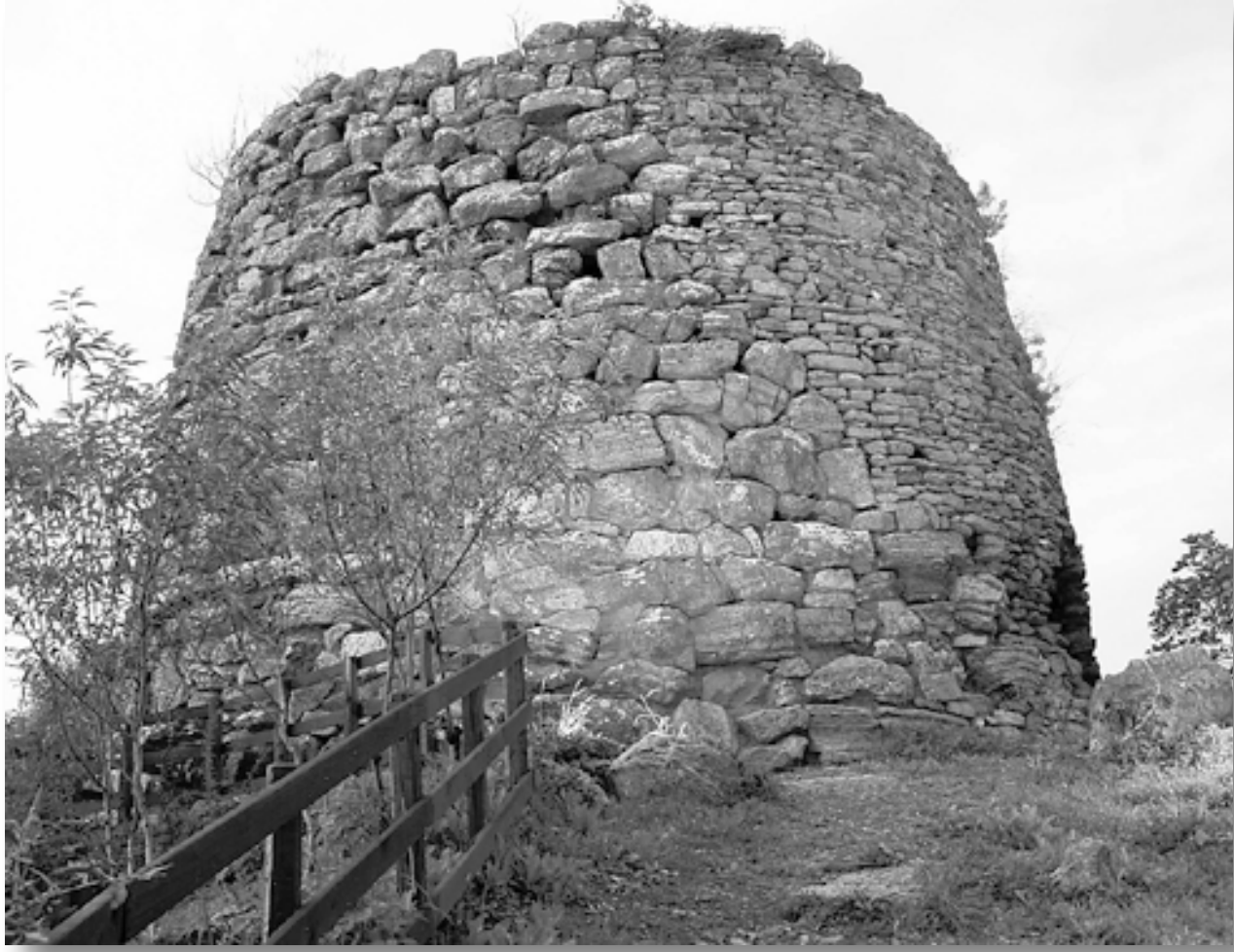
An almost unique case of a Nuragic construction located within a built-up area, it is the most important archaeological evidence of the Armungia territory: it is, in fact, a nuraghe built between the 15th and 14th centuries B.C. which, despite having undergone some modifications over more than three millennia, still preserves its internal structure intact. It is definitely recommended to visit the Nuraghe, which, illuminated, constitutes a singular suggestion for those who wish to enjoy the spectacle offered by its view, especially in the
evening hours. A lighting system has recently been set up that, emphasizing the shape and structure of the building, amplifies its visual effects on the outside and creates an engaging and suffused atmosphere on the inside. Externally, it consists of a single stone tower with a truncated cone shape; internally, of a corridor and then a central chamber (circular in shape, with a diameter of between 5.20 and 5.40 meters) from which the staircase leading to the top starts. Two large niches open from the central chamber, in one of which various shards and materials from the Byzantine period were found. Inside the Nuraghe is a cistern also dating to the Byzantine period.