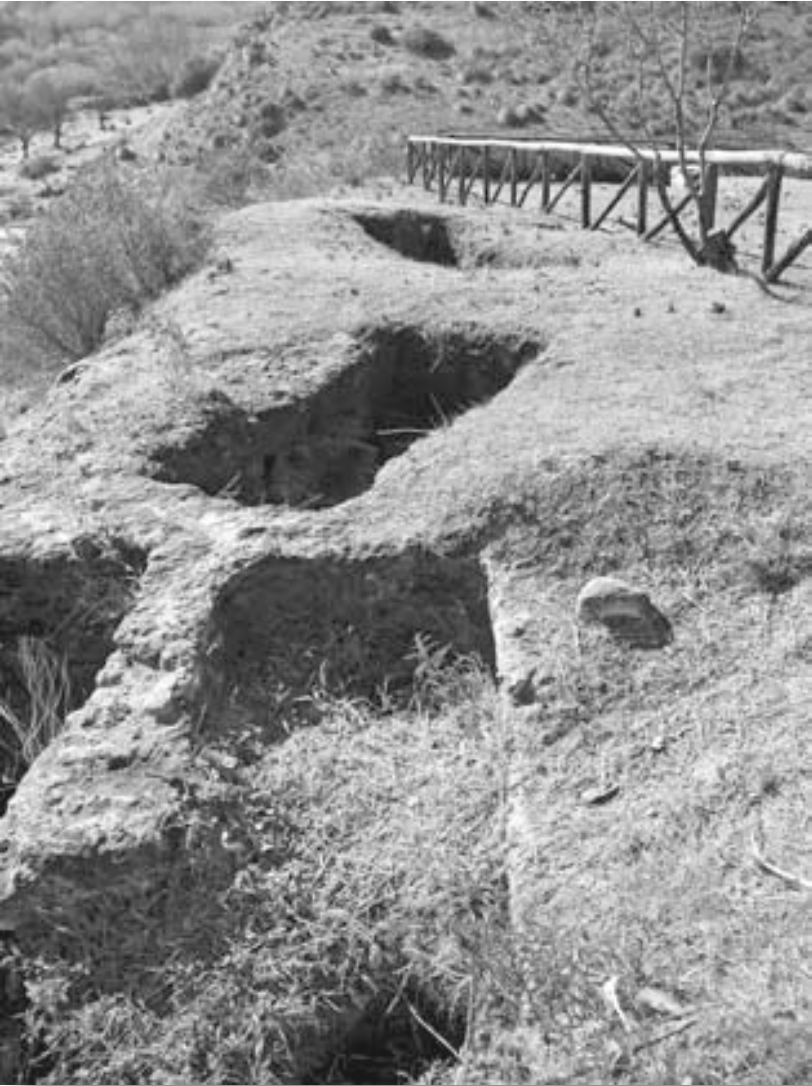
The Punic necropolis of Monte Luna was the subject, in the late 1970s and early 1980s, of a series of excavation campaigns, which uncovered 120 tombs, most of them hypogeic chamber tombs. The access shafts to the tombs, one to six meters deep, open onto single or twin chambers, which have returned traces of plaster with banded or festooned decoration in red paint. These typological specificities have punctual correspondences with numerous Punic centers in the Western Mediterranean, which, although characterized by different peculiarities, were affected during the fifth and fourth centuries B.C. by the strong influence exerted by Carthage. The excavations brought to light interesting and rich grave goods, in which the vascular forms and ornaments testify, as in other centers on the island, to the numerous cultural and commercial contacts with Greek peoples from both the colonies of the West and the Motherland. Commercial and domestic amphorae, jugs, cups, plates, oil lamps, and ointments have been found. There are numerous gold, silver and bronze jewelry of fine workmanship, as well as necklaces and amulets made of jasper, hard stone, ivory and glass paste. Beautiful scarabs, most of them of Tharrensian production, with Egyptian divine images or heroes of Greek tradition engraved on the base. Inhumation in hypogeic chambers was flanked and replaced between the late 4th and 3rd centuries B.C.E. by the creation of earthen grave tombs and deposition in clay urns, with the rite of incineration prevailing. The change in funerary customs is evidence of the incipient Romanization of the area, which traces the vicissitudes of the Santu Teru settlement back to the coeval centers of the whole of Sardinia.