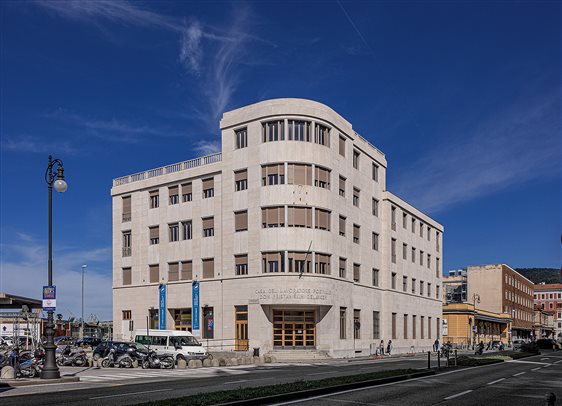
Trieste: a city of crossroads of languages, peoples and religions, where Italian and Mediterranean cultures meet with the history and culture of the native Slovenian-speaking population and with the Central European culture of a past linked to the Habsburg Empire. Beginning in the 1700s, thanks to the Austrian Emperor Charles VI but especially to his daughter Maria Theresa, Trieste became a very important port and trading emporium and thus a rich cosmopolitan city. The city’s heart is the splendid main square, Piazza dell’Unità d’Italia. The palaces that decorate it, along with those that grace the so-called Borgo Teresiano with the Grand Canal at its center, are representative of this golden age. The twentieth century, on the other hand, bequeathed many buildings with a rationalist imprint. But it is the troubled events of the 20th century that make this area unique historically: from the Fascist regime to the Nazi occupation, from the Yugoslav occupation in May 1945 to the period of the Anglo-American Allied Military Government until 1954.