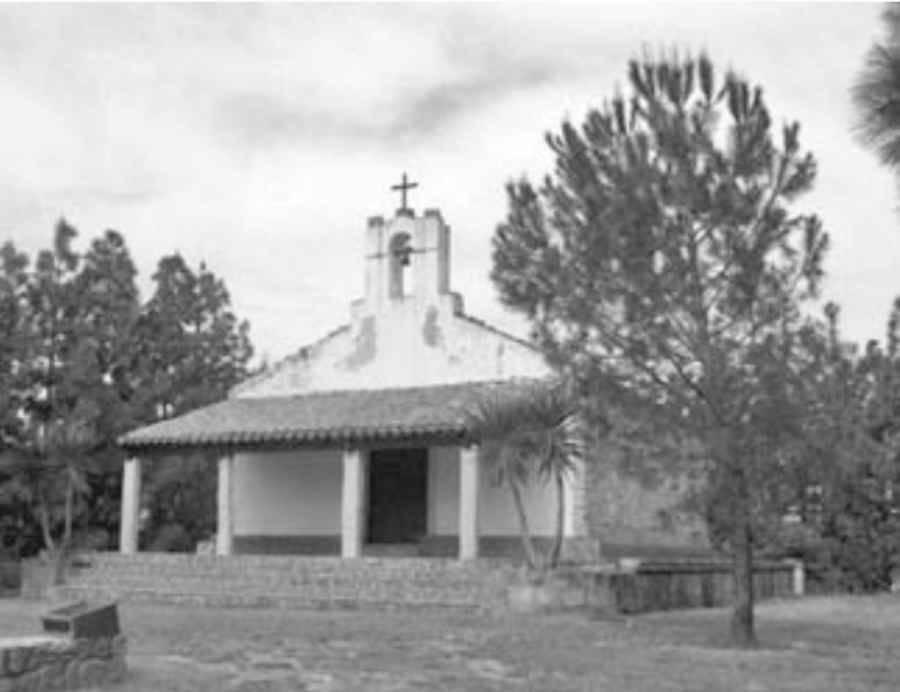
The country church, entitled Santa Maria Maddalena, stands on the periphery of the present-day town of Guamaggiore, not far from the Romanesque church dedicated to St. Peter. The plant, immersed in an area of recent reforestation, known as the Santa Maria Maddalena pine forest, rises on a natural interrapture that from the top of the hill looks over the neighboring towns (Ortacesus, Guasili, Selegas).
The frequentation of the site, attested since the Nuragic age, is also reflected in the foundations of the church made from Nuragic spoil. Indeed, documentary sources, (Goffredo Casalis’s Dictionary ) show that the factory of Santa Maria was erected on the ruins of a nuraghe.
The construction of the architectural layout dates perhaps to the early 18th century. The building has a gabled facade on the outside. The facade plan is preceded by a narthex loggia that set on wooden beams and reeded is supported by four trachyte pillars.
To crown the facade stands a small bell gable. The interior features a single-nave room with wooden truss roofing. Two small windows, located along the left side elevation and in the rear elevation, are the only sources of direct light.
The right side of the hall holds a plinth and part of a shaft of a carved sandstone striated column. The column (13th century ?), of Sardinian craftsmanship made as a plinth for a stoup, proposes the decorative strigil motif (wavy groove) characteristic of the Roman tradition.