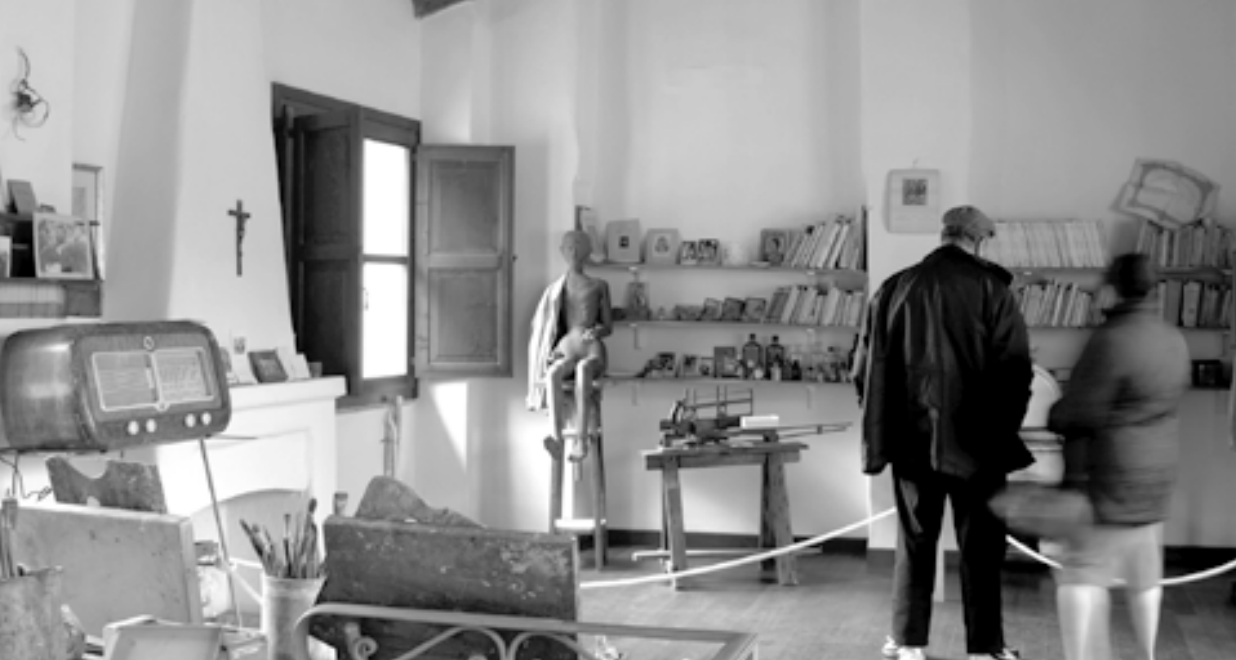
The house of painter and engraver Carmelo Floris is located in the Sant’Anastasio district. Of very ancient origin, probably pre-1700, it represents an important example of rural architecture.
The house, which became famous for hosting the artist, underwent an initial restoration in 1951 by the painter himself. Later, in the late 1990s, the building was purchased by the municipality with the intention of protecting and enhancing it not only architecturally but also culturally, considering that it is also the place where the great painter spent his entire life and drew much of his inspiration. In 2001 the building underwent a restoration that in principle respected the pre-existing structure. The house had three levels: the ground floor overlooking the inner courtyard, the second floor where the house proper was located, and the second floor occupied by the artist’s studio. Even today it is still possible to admire the artist’s room with the antique inlaid wooden bed, decorated closet and bedside tables dating back to 1800, the room of the painter’s mother furnished with the
antique furniture, and again S’o’ile a square made of four granite slabs placed in the center of the room where the fire was lit, the bread oven and an old machine used in the past for bread making.
Also in the house are two oil paintings, thirteen prints and an unfinished work by Carmelo Floris, numerous works by contemporary artists and 70 prints by E. Piras, a student of Floris.