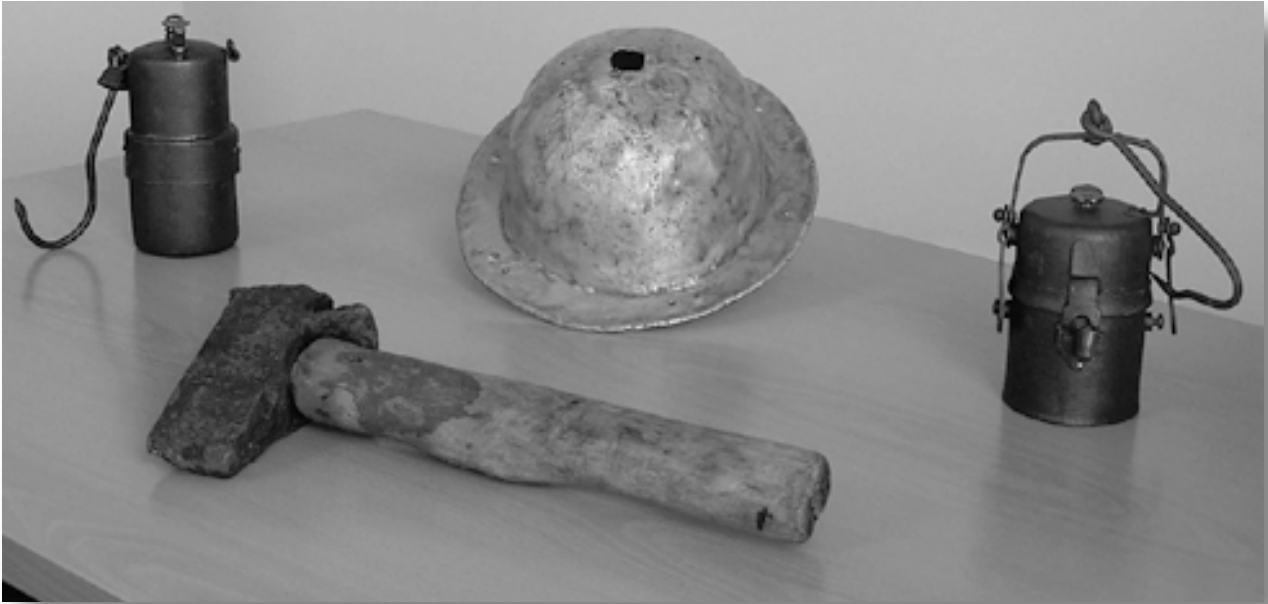
In the first half of the nineteenth century, an antimonite deposit was identified near the town of Villasalto, coinciding with a massive fault in the rock. Exploitation work to obtain antimony, a semimetal used in metallurgy and the production of paints and enamels, continued until the mid-1980s. Because of the abundance of the ore and its quality, the Villasalto deposit was among the largest in Europe, which is why a smelter was planted near the area to process the ore, unanimously considered to be at the forefront of those on the island. In an elevated position with respect to the smelter and the accesses to the underground, the mine village sprang up around the elegant Palazzina della Direzione. On the ground floor of the building were the administrative and technical offices, while on the upper floor lived the Director and his family. The rest of the technicians lived in a series of lodgings scattered around the area, while in some of the buildings were located, the canteen, the church, the warehouses and the mine workshops. Since 2001, the village of Su Suergiu has been recovered and is preparing to become a tourist center. A collection of historical mining artifacts can be visited in the executive building, while the second floor will house the peripheral offices of the Consortium of the Historical and Environmental Geomining Park of Sardinia. The Su Suergiu mine is located in the center of one of the largest areas of the Geomining Park of Sardinia, called Sarrabus-Gerrei. There are two reasons why these territories are part of the important set of protected areas: in the Sarrabus area the nation’s largest silver deposit was developed in the 19th century, while in the Gerrei, in addition to the Su Suergiu antimony mine, Europe’s largest fluorite deposit is still active in Silius. In both cases the centuries-old mining activity has left important evidence, some of which can be visited today, in contact with unparalleled nature and history.