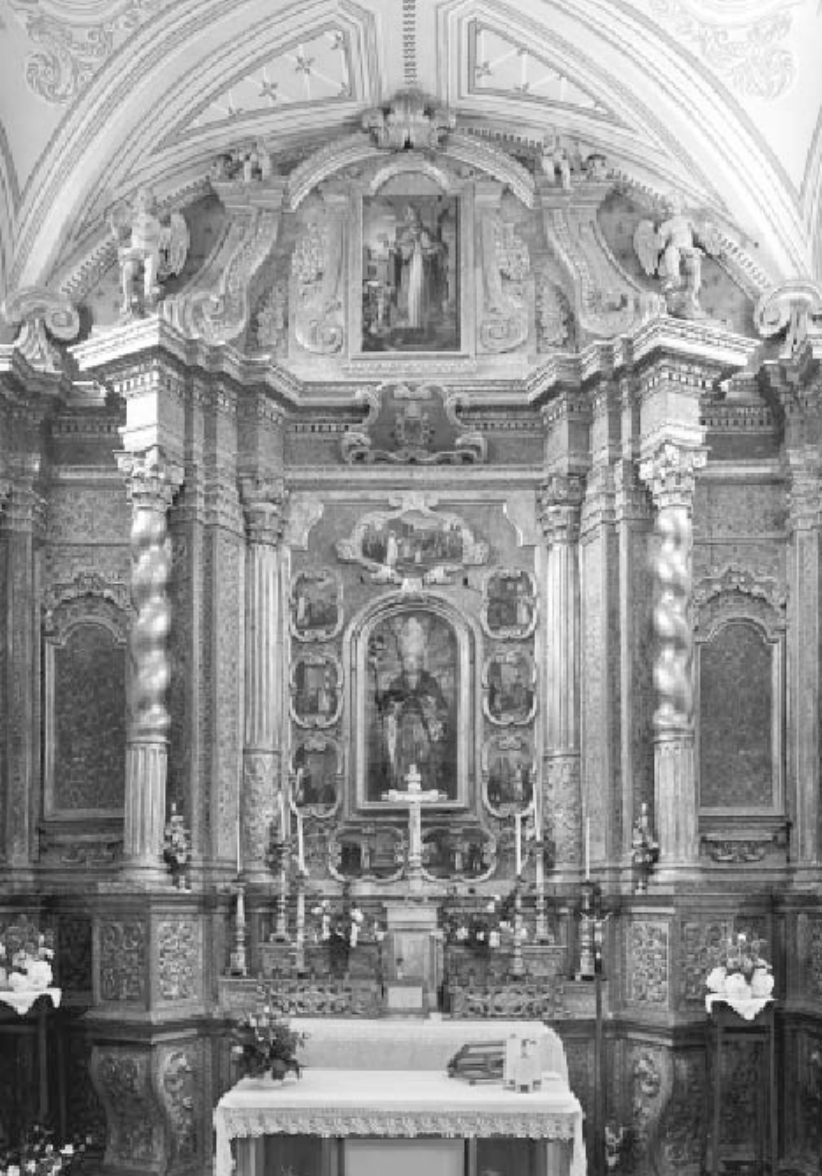
The shrine probably arose around the 11th-12th centuries on a pre-existing worship area, as its layout seems to respect the four-sided layout of a small Byzantine church. It is believed that the numerous remodels over time have changed what must have been the original physiognomy of the whole. It is assumed that this building predates the major church.
In 1117, the year in which the Leggenda Sanctissimi Georgii Suellensis was written, which describes the life of St. George and his diocese established as an enclave in the Diocese of Dolia, it is assumed that the chapel was already in existence.
This sacred place is also mentioned in other ancient documents from the 1600s as Iglesieta y Capelleta de Sant Jordi.
The present state of the architectural complex consists of a vestibule or anti-sanctuary and the sanctuary, which can be accessed either through an entrance inside the cathedral or through an external entrance that gives onto the forecourt. The sanctuary and the anti-sanctuary are enriched by the presence of two retables depicting the Saint’s life at the most significant moments of his apostolate in Trexenta and Barbagia.
The sanctuary is the building specifically used for the worship of St. George the Bishop in which, according to tradition, handed down orally over the centuries, the Saint’s remains rest.